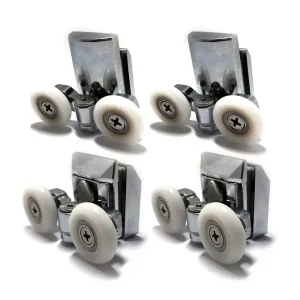
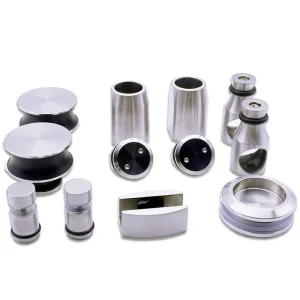
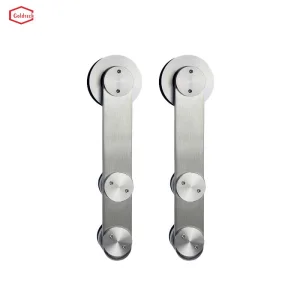
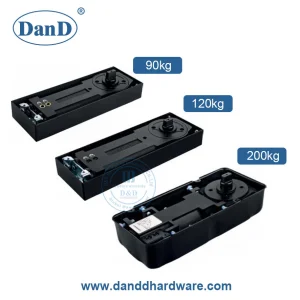
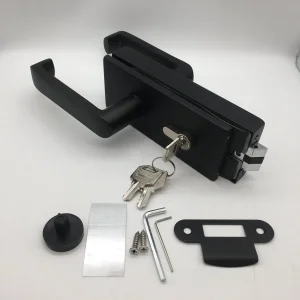
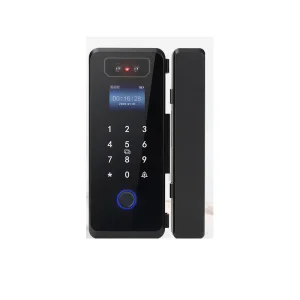
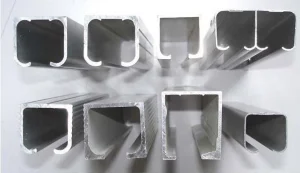
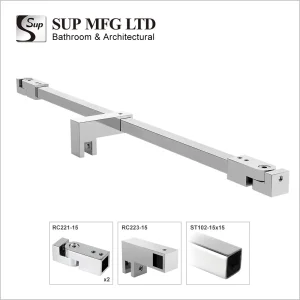
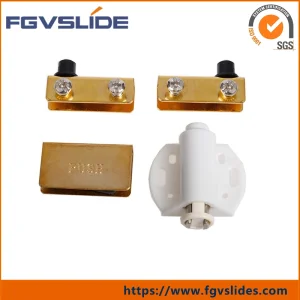
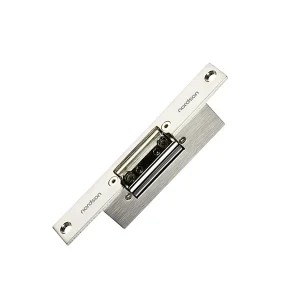
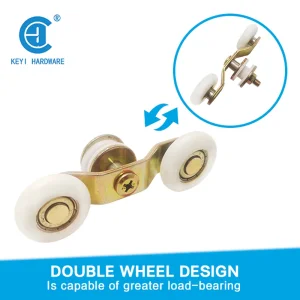
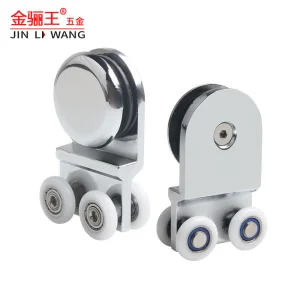
Explore our premium collection of highly durable glass hardware components engineered for heavy-duty commercial and residential glass door setups.
In contemporary architectural design, structural minimalism and frameless configurations have emerged as the gold standards for commercial, residential, and office partitions. Central to the success of these frameless glass assemblies is the structural integration of H Shape Glass Seals (often referred to as 180-degree glass-to-glass seals). These specialized components bridge the physical gap between adjacent glass panels, delivering necessary barriers against atmospheric conditions, acoustic migration, and moisture penetration.
Historically, the installation of glass assemblies relied heavily on bulky metal frames or structural silicone wet-glazing. While structurally secure, these older methods compromised visual transparency and created long-term maintenance liabilities due to silicone yellowing and mold degradation. Modern co-extruded H-profile seals solve these issues by relying on friction-fit mechanics, integrating rigid PVC cores for structural grip alongside soft elastomer fins that offer dynamic, compression-capable sealing properties.
From commercial skyscrapers to high-end residential spaces, H Shape Glass Seals perform key functions that preserve both the structural integrity and spatial comfort of the building environment:
Prevents capillary migration in high-moisture setups, including walk-in showers and dynamic commercial wet areas, keeping dry zones dry.
Minimizes air paths between panels to yield measurable Sound Transmission Class (STC) improvements in office environments and conference halls.
Acts as a thermal break to reduce convection losses at glass junctions, optimizing overall building energy efficiency and reducing HVAC loads.
The international supply chain for H Shape Glass Seals has experienced a major transition toward advanced, co-extruded thermoplastic polymers. Historically, basic PVC compounds dominated the market. However, their tendency to yellow under UV exposure and become brittle in cold climates led to engineering innovations. Today, leading manufacturers utilize co-extruded PVC formulations containing premium UV stabilizers, alongside Polycarbonate (PC) and Thermoplastic Elastomers (TPE).
In the global marketplace, Chinese manufacturing hubs—particularly those in the Pearl River Delta, such as Guangzhou—have established massive production infrastructures. These hubs feature advanced twin-screw co-extrusion technology, automated inline cutting systems, and strict QC protocols that keep dimensional tolerances within +/- 0.1mm.
| Material Configuration | Hardness Rating (Shore) | UV Stability Index | Suitable Glass Thickness | Recommended Gap Clearances |
|---|---|---|---|---|
| Co-Extruded Rigid/Soft PVC | Rigid: Shore A 80 | Soft: Shore A 60 | Excellent (>1000 hrs UV-A) | 8mm, 10mm, 12mm | 3.0mm – 5.5mm |
| High-Performance Polycarbonate | Shore D 75 (High rigidity) | Premium Grade with UV Coating | 10mm, 12mm, 15mm | 2.5mm – 4.0mm |
| Thermoplastic Elastomer (TPE) | Flexible: Shore A 55 | Outstanding (Weatherproof) | 6mm, 8mm, 10mm | 4.0mm – 7.0mm |
| Silicone Rubber (Extruded) | Shore A 65 | Superior (High Temperature) | 10mm, 12mm | 3.5mm – 6.0mm |
Guangzhou Nova Glass Door Co., Ltd. is a professional manufacturer specializing in glass door systems and architectural glass hardware. Located in Guangzhou, China, the company focuses on providing high-quality solutions for residential, commercial, and office glass door applications. Our main product range includes glass clamps, door closers, glass hinges, glass door handles, and other related hardware accessories designed for durability, safety, and modern aesthetics.
Founded in 2012, Nova Glass Door has steadily grown from a small workshop into a reliable supplier in the glass hardware industry. With more than 80 skilled employees and a dedicated technical team, the company operates in a modern production facility covering approximately 6,000 square meters. Our factory is equipped with advanced manufacturing equipment and strict quality control systems to ensure consistent product performance.
Over the years, Nova Glass Door has expanded its presence in both domestic and international markets, exporting products to Europe, North America, Southeast Asia, and the Middle East. We are committed to continuous innovation, efficient production, and customer-focused service.
By combining professional manufacturing experience with modern design concepts, Guangzhou Nova Glass Door Co., Ltd. aims to provide dependable glass door hardware solutions and build long-term partnerships with customers worldwide.
Nova Glass Door's state-of-the-art 6,000 sqm manufacturing facility in Guangzhou, China.
Architectural specifications for glass seals vary depending on regional climates, building codes, and safety standards:
In North America, commercial building glass partition projects require materials that comply with ASTM E84 (flame spread and smoke development ratings). H-shape seals used in high-traffic commercial spaces must also satisfy cleanability and durability metrics.
EU regulations focus heavily on chemical safety. Manufacturers exporting to European markets must secure REACH and RoHS certifications, ensuring their plasticizers do not contain harmful phthalates or toxic heavy metals.
Projects in the Middle East demand high resistance to solar radiation and dust. Glass seals in these regions require elevated levels of benzotriazole UV absorbers to prevent degradation and discoloration from intense desert sunlight.
1. Corporate Office Environments: In corporate office interiors, H-profile seals join frameless glass partition walls to maintain privacy. They act as acoustic buffers, stopping noise from leaking between adjacent meeting spaces and individual offices.
2. Premium Wet Room Enclosures: For residential master suites and luxury hotels, H Shape Glass Seals seal the gap between fixed panels and glass doors. Our co-extruded designs keep water within wet areas to prevent structural damage in surrounding spaces.
3. Retail Storefront Assemblies: Malls and boutique retail entryways use heavy-duty H-seals to align thick 12mm tempered safety glass panels, creating sleek, continuous display facades that keep out dust and debris.
The architectural seal sector continues to evolve to meet changing building requirements. Key research and development initiatives focus on three primary technological advancements:
A: Co-extruded PVC H-seals feature a rigid channel designed to grip the glass edge alongside a soft, flexible sealing fin, making them easy to install and highly versatile. Polycarbonate H-seals are rigid throughout the entire profile. While polycarbonate offers superior clarity and structural strength, it is less flexible and requires precise glass gap spacing during installation.
A: Standard H-shape glass-to-glass installations require a gap of 3.0mm to 5.0mm between adjacent tempered panels. For 10mm glass, using a seal with a 4mm deep channel is recommended to ensure a secure friction fit without requiring structural adhesives.
A: Yes. However, standard rigid PVC profiles will not conform to tight radii. For curved glass walls, specifiers should choose flexible TPE (Thermoplastic Elastomer) or soft silicone profiles, which bend to match the glass curvature without warping.
A: High-quality manufacturers add UV-stabilizing chemicals, such as Hindered Amine Light Stabilizers (HALS) and UV absorbers, to their polymer formulas. These compounds absorb solar UV radiation, preventing the chemical chain degradation that causes yellowing and brittleness.
A: For commercial building compliance, buyers should request SGS or Intertek testing reports verifying compliance with REACH (chemical safety), RoHS (hazardous substances restriction), and ASTM E84 / EN 13501-1 fire performance ratings.
A: Standard H-seals are designed as push-on, friction-fit profiles. No adhesive tape is required for typical interior partitions. However, for glass panels exposed to strong exterior winds or high-pressure water spray, adding clear structural silicone inside the channel can help ensure a long-lasting seal.
A: Under normal interior operating conditions with regular cleaning, a premium, UV-stabilized H-seal lasts between 5 and 8 years before it begins to lose elasticity. Exterior installations in hot, sunny regions may require replacement every 3 to 5 years to maintain peak performance.
A: We operate under a strict ISO 9001-certified management system. All raw polymer materials undergo batch testing for hardness and melt flow index before production. Additionally, we use real-time laser measurement systems during the extrusion process to ensure our profiles match target dimensions within a strict ±0.1mm tolerance.
Complete your frameless architectural glass installations with our range of high-precision tracks, magnetic catches, and electronic safety locks.
 Nova Glass Door