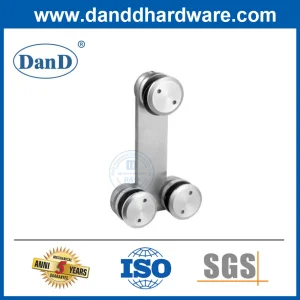
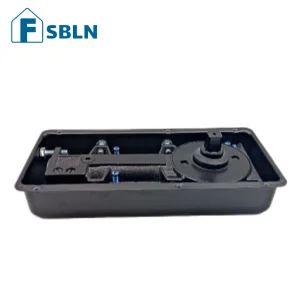
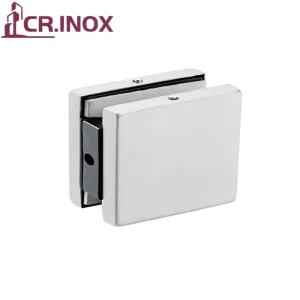
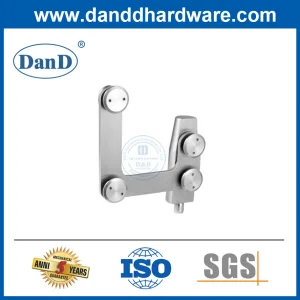
High-performance edge profiles, locking mechanisms, and structural connectors for heavy-duty commercial applications.
In modern architecture, glass has evolved from a simple aesthetic window fill to a primary structural component. Standard frameless doors, partitions, and balustrades are widely specified in commercial office towers, hospitality complexes, retail shopfronts, and high-end residential projects. However, the inherent properties of glass make it vulnerable to localized stress concentration, particularly along its exposed perimeter. The edge of a glass pane is its most structurally vulnerable point; over 90% of spontaneous tempered glass breakages originate from minor micro-fractures, chips, or dynamic impacts along the edges.
This industry whitepaper addresses the vital engineering necessity of Glass Door Edge Guards. Specifying high-performance edge protection is no longer just an aesthetic option but a risk mitigation protocol that ensures public safety, enhances system durability, and ensures compliance with building codes worldwide. As China's leading exporter of premium architectural glass components, Guangzhou Nova Glass Door Co., Ltd. integrates state-of-the-art metallurgy, polymer extrusion, and precision manufacturing to deliver global solutions designed for heavy-duty, high-frequency environments.
Understanding why edge guards are necessary requires an understanding of how tempered glass behaves. During the thermal tempering process, the outer surfaces of the glass are placed into compression while the inner core remains under tensile stress. This equilibrium gives tempered glass its structural strength.
However, this stress equilibrium is highly sensitive along the cut perimeter. If a glass door edge strikes a hard surface—such as stone tiles, metal thresholds, or adjacent glass panels—impact forces can exceed the local compressive surface stress layer (typically 10,000 to 15,000 psi). This initiates deep micro-fractures that propagate quickly through the tensile zone, resulting in immediate structural failure (spontaneous shattering).
For international procurement directors, facade consultants, and master distributors, purchasing glass door hardware from China involves assessing technical specifications, quality verification, and manufacturing consistency. The market has evolved past standard off-the-shelf plastic channels to custom-engineered metallic profiles and high-density, UV-stabilized elastomer options.
A decade of engineering excellence in architectural glass systems and high-durability hardware accessories.

Founded in 2012, Guangzhou Nova Glass Door Co., Ltd. has grown from a specialized workshop into a reliable supplier in the glass hardware industry. Based in Guangzhou, China, the company operates a modern production facility spanning approximately 6,000 square meters and employs over 80 skilled workers and technical engineers.
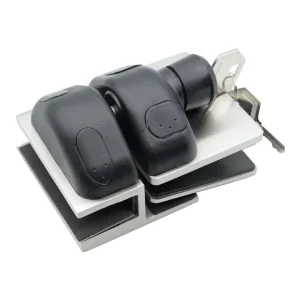
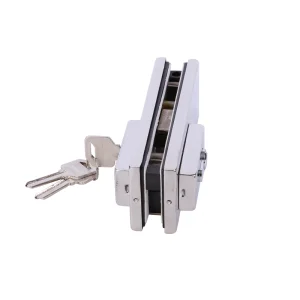
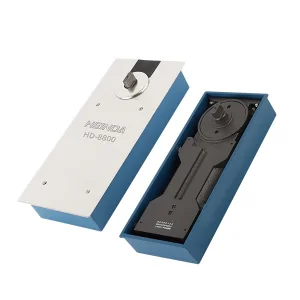
Nova Glass Door's factory utilizes automated CNC machining, high-capacity stamping presses, and rigorous testing protocols to ensure stable and consistent performance. Our extensive product portfolio includes glass clamps, heavy-duty floor springs, sliding rollers, patch fittings, locks, and custom edge guard systems tailored for commercial, residential, and office environments.
Exporting to Europe, North America, Southeast Asia, and the Middle East, Nova Glass Door continues to support global commercial projects by delivering reliable hardware designs that combine safety, durability, and contemporary architectural style.
As architectural requirements demand taller and heavier glass installations (such as jumbo-sized 19mm monolithic tempered glass storefronts), hardware manufacturers are shifting toward high-performance materials. Guangzhou Nova Glass Door Co., Ltd. follows a technical development roadmap focused on three key areas:
Traditional rigid PVC edge guards are prone to cracking, while soft PVC guards slide out of alignment. Advanced profiles use co-extrusion technology, combining a rigid backbone for structural grip with soft, flexible sealing fins. This dual-durometer profile ensures secure attachment without adhesive, while maintaining a reliable, long-lasting weather seal.
For metallic edge guards, architectural coatings must withstand humidity, chemical cleaners, and abrasive contact. Our physical vapor deposition (PVD) finish processes apply titanium and zirconium nitride coatings at a molecular level, creating surfaces that are highly resistant to scratching, peeling, and corrosion.
Modern commercial buildings experience significant vibration from HVAC systems, seismic activity, and structural movement. Incorporating high-dampening thermoplastic elastomers (TPE) inside the edge guard channel absorbs kinetic energy, protecting the glass edge from structural contact and vibrations.
International commercial projects require strict adherence to regional safety and construction codes. Importing and installing untested hardware risks liability issues and project delays. Nova Glass Door systems are designed and tested to meet international standards:
| Certification Scheme | Regional Authority | Focus Properties |
|---|---|---|
| ANSI Z97.1 & CPSC 16 CFR 1201 | North America (USA & Canada) | Impact performance, fragmentation dynamics under force. |
| EN 12150-1 & EN 14428 | European Union (EU) | Flatness tolerances, edge profiles, thermal resistance. |
| AS/NZS 2208:1996 | Australia & New Zealand | Safety glazing materials in buildings, extreme temperature cycle survival. |
Our Quality Management System (QMS) operates in compliance with ISO 9001:2015. Every manufacturing batch undergoes mechanical cycling, salt spray corrosion testing (ASTM B117), and dimensional inspection to ensure that each shipment meets specifications prior to dispatch.
Technical answers for structural engineers, project managers, and procurement professionals.
High-grade stainless steel fittings, hydraulic floor hinges, and magnetic latching mechanisms.
 Nova Glass Door