7 Best Reasons Why Tempered Glass Is Used for Glass Doors?

Time:2026-10-11 Author:Henry
0%

Glass doors bring light, openness, and a modern appearance to homes, offices, hotels, and retail spaces. However, ordinary glass can break into large, sharp fragments after a strong impact. This concern explains why tempered glass is used for glass doors in many carefully designed projects. It offers greater resistance than standard annealed glass and supports safer everyday movement.

Tempered glass is heat-treated during manufacturing. The process strengthens its surface and changes how it breaks. If severe damage occurs, it usually shatters into smaller, blunt-edged pieces instead of long, dangerous shards. That difference matters near busy entrances, shower areas, balconies, and interior partitions. A door may face repeated contact from hands, carts, luggage, or accidental bumps.

This guide explores seven practical reasons behind this material choice. It considers impact resistance, thermal performance, safety behavior, visual quality, maintenance, and installation requirements. These points reflect common recommendations from experienced glass fabricators and safety-focused building professionals. Still, tempered glass is not indestructible. Poor measurements, damaged edges, incorrect hardware, or careless installation can create real risks. I have seen small edge chips become serious weaknesses over time.

The right specification depends on the door’s location, size, thickness, hardware, and local building requirements. Professional measurement and qualified installation remain essential. A beautiful glass door should also feel dependable when used every day. Understanding the material helps property owners make a more informed decision, rather than choosing glass based only on appearance.
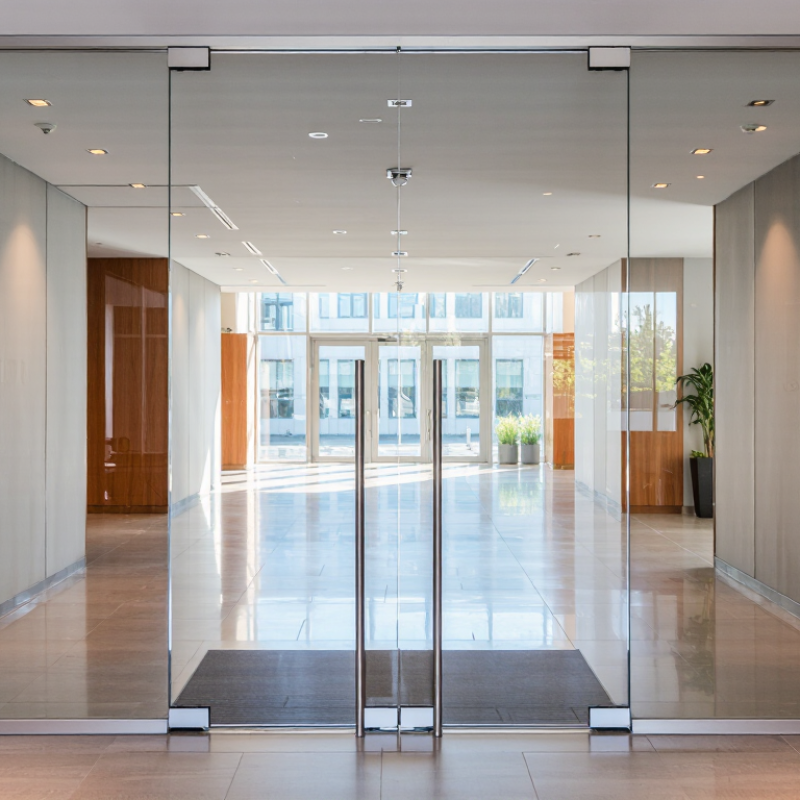
7 Best Reasons Why Tempered Glass Is Used for Glass Doors?

What Is Tempered Glass and How Is It Made?

Tempered glass is safety glass designed for doors, partitions, and shower enclosures. It is stronger than ordinary annealed glass because its surface is placed under compression. This treatment helps it resist impact, heat changes, and everyday door movement. Still, it is not unbreakable. A sharp strike near an edge can cause failure.

Manufacturing begins with carefully cut and polished glass. The glass is heated to roughly 600–700°C in a controlled furnace. Rollers move it through the heating zone. Powerful air jets then cool both surfaces quickly. This rapid cooling creates compression outside and tension inside. If the panel breaks, it usually separates into many small, blunt-edged pieces instead of long, knife-like shards. The process improves safety, but it also makes later cutting or drilling impossible. One imperfect measurement can waste the entire panel.

Tips: Check the glass edges before installation. Tiny chips may become weak points. Ask a qualified fabricator to confirm thickness, dimensions, and door hardware compatibility. Keep fasteners aligned and avoid metal contact with bare glass. In real installations, small alignment errors matter more than expected. Tempered glass can look flawless while carrying hidden edge damage. Regular inspection around hinges and corners is sensible, especially on frequently used doors.

How Tempered Glass Improves Safety in Glass Doors

7 Best Reasons Why Tempered Glass Is Used for Glass Doors?

How Tempered Glass Improves Safety in Glass Doors

Tempered glass is heat-treated to improve strength and impact resistance. In busy entrances, it handles everyday bumps, slamming, and temperature changes better than ordinary glass. If it breaks, it usually crumbles into small, blunt granules instead of long, sharp shards. This greatly reduces the chance of severe cuts. It also provides clear visibility, helping people notice a closed door before walking into it.

Safety depends on more than the glass itself. Correct thickness, polished edges, strong hinges, and accurate installation all matter. The glass should be inspected for chips, scratches, and stress around drilled holes. A tiny edge defect can become a serious weakness later. Tempered glass is safer, but it is not unbreakable. That detail is easy to forget. Local building requirements should also guide the design and installation process.

Tips: Choose glass suitable for the door’s size and daily traffic. Keep metal hardware properly aligned and tightened. Never drill or cut tempered glass after treatment. Clean the edges carefully during installation. Check the door regularly for cracks, loose fittings, or unusual movement. If the glass looks damaged, restrict use and arrange a professional inspection. Safety improves when good material choices meet careful workmanship.

Why Tempered Glass Offers Greater Strength and Durability

Tempered glass is widely chosen for glass doors because it combines strength with practical durability. During manufacturing, the glass is heated and rapidly cooled. This creates compressive stress on its surfaces. As a result, it can be roughly four to five times stronger than ordinary annealed glass of the same thickness.

Daily door use can be demanding. A heavy push, a moving cart, or repeated temperature changes may stress weak materials. Tempered glass handles these conditions better when its thickness and fittings are properly selected. If it breaks, it usually crumbles into small, relatively blunt pieces instead of long, sharp shards. That reduces the chance of severe cuts, but it does not make the door completely harmless. No glass is invincible.

Its durability also depends on installation quality. A trained installer should check the door edges, drilled holes, hinges, seals, and frame alignment. Tiny edge chips can become serious weak points later. Moisture, slamming, and uneven pressure may worsen them. This detail is easy to overlook. Tempered glass cannot be cut or drilled after treatment, so measurements must be accurate before production. Safety glass standards and suitable hardware should guide the selection. A strong panel with poor fittings may still fail early. The material deserves confidence, but careful inspection remains necessary.

7 Best Reasons Why Tempered Glass Is Used for Glass Doors: Greater Strength and Durability
Reason Key Performance Dimension Typical Fact or Data Why It Matters for Glass Doors
1. Greater Mechanical Strength Resistance to bending and impact Tempered glass generally has approximately 4–5 times greater surface strength than annealed glass of the same thickness. It is better suited to frequent opening, closing, handling, and everyday impact than ordinary annealed glass.
2. Safer Breakage Pattern Fragment size and shape after breakage When properly tempered glass breaks, it usually disintegrates into many small, relatively blunt granules instead of large, sharp shards. This reduces the likelihood of severe laceration compared with large fragments produced by broken annealed glass.
3. Better Thermal-Shock Resistance Resistance to sudden temperature changes Tempered glass can typically withstand a temperature difference of about 200°C, while ordinary annealed glass commonly withstands about 40–60°C. It performs more reliably near sunny entrances, heated interiors, kitchens, bathrooms, and other areas with rapid temperature changes.
4. Improved Durability in Daily Use Service performance under repeated use Tempering increases the glass surface compression and helps the panel tolerate routine mechanical stresses without changing its transparency or basic appearance. Doors can remain functional and visually clear through repeated operation when they are correctly sized, installed, and maintained.
5. Suitable for Larger Door Panels Design flexibility and panel size Tempered safety glass is available in a wide range of thicknesses, commonly including 6 mm, 8 mm, 10 mm, and 12 mm for architectural applications. It supports frameless and framed door designs while providing the stiffness and strength required for many residential and commercial installations.
6. Compatible with Door Hardware Hardware preparation and installation Tempered glass can be factory-cut, drilled, and edge-finished before heat treatment to accommodate hinges, handles, locks, and patch fittings. Pre-planned fabrication allows secure hardware installation and helps reduce the risk of damage during assembly.
7. Low Maintenance and Long-Term Value Cleaning, appearance, and longevity Tempered glass is non-porous, does not rust, and retains its basic optical properties under normal indoor and outdoor conditions. Routine cleaning is generally sufficient, making it a durable and practical choice for high-traffic entrances and interior partitions.

How Heat Resistance Makes Tempered Glass Suitable for Doors

Heat resistance is a practical reason tempered glass suits modern doors. During tempering, glass is heated to about 620°C, then rapidly cooled. This process creates compression on the surface and tension inside. According to National Glass Association technical guidance, tempered glass can provide roughly four times the bending strength of annealed glass of equal thickness. It also handles sudden temperature changes far better.

Picture a glass door beside a sunny window. One side may become hot while the shaded edge stays cool. This uneven heating creates thermal stress. Industry testing often reports tempered glass tolerating temperature differences near 200°C, while ordinary annealed glass may tolerate only about 40°C. ASTM C1048 identifies heat-treated glass for applications requiring improved strength and thermal performance. That makes it useful for entrances, shower enclosures, and interior doors exposed to warm air or direct sunlight.

It is not fireproof.

A mistake is treating heat resistance as unlimited protection. Poor edge quality, deep scratches, incorrect installation, or trapped frame pressure can still cause failure. In my view, designers should check glass thickness, edge finishing, hardware clearance, and local safety-glazing requirements together. The data supports tempered glass, but installation details decide whether that performance survives real daily use.

Tempered glass is widely used for glass doors because it tolerates rapid temperature changes much better than ordinary annealed glass. Typical industry reference values indicate that tempered glass can withstand thermal shocks of approximately 200°C, while annealed glass is commonly rated at about 40°C. Actual performance varies with glass thickness, edge quality, processing, and installation conditions.

What Design and Maintenance Benefits Does Tempered Glass Provide?

Tempered glass gives a door a clean, modern appearance without making a room feel closed in. Its clear surface allows daylight to pass between spaces, helping narrow halls, bathrooms, and offices appear larger. Frosted or patterned finishes can add privacy while preserving a lightweight visual effect. Slim metal hardware usually complements the glass rather than dominating the design.

Maintenance is practical when the surface is installed correctly. A soft cloth, mild soap, and clean water usually remove fingerprints, dust, and water marks. Avoid abrasive pads. They can leave fine scratches that become visible under strong lighting. In busy entrances, a simple weekly cleaning routine keeps the door looking professional. Small details matter.

Tempered glass is also processed to reduce injury risks if it breaks, as it typically forms smaller granular pieces instead of long sharp shards. However, it is not indestructible. The edges remain vulnerable to impact, especially during installation or when the door swings against hard hardware. Proper alignment, suitable hinges, and routine checks are essential. A loose handle may create stress around its mounting point. That detail is easy to overlook. Tempered glass cannot usually be cut or drilled after treatment, so accurate measurements must happen before production. Even careful planning has limits, and site conditions sometimes require adjustment.

FAQS

Why is tempered glass stronger than ordinary glass?

It is heated and rapidly cooled during production. This creates compressive stress on its surfaces. It can be roughly four to five times stronger at the same thickness.

What happens if tempered glass breaks?

It usually crumbles into small, relatively blunt pieces. This can reduce severe cut risks. It is not completely harmless.

Can tempered glass handle sudden temperature changes?

Yes, it generally handles thermal shock better than annealed glass. A sunny pane may heat on one side while its shaded edge stays cool. Some testing reports tolerance near 200°C, but actual performance varies.

Is tempered glass fireproof?

No. It is not fireproof. Heat resistance does not provide unlimited protection during fire exposure.

Where can tempered glass work well in doors?

It suits entrances, shower enclosures, and interior doors exposed to warm air or sunlight. Choose suitable thickness and fittings for each location.

What installation details affect durability?

Installers should inspect edges, drilled holes, hinges, seals, and frame alignment. Tiny edge chips can become weak points. Slamming, moisture, and uneven pressure may worsen damage.

Can tempered glass be cut or drilled after treatment?

No. Cutting or drilling after tempering is not practical. Measurements must be accurate before production. A small planning error can waste the panel.

Does strong glass guarantee a durable door?

No. A strong panel with poor fittings may fail early. Hardware clearance, edge finishing, thickness, and safety-glazing requirements must work together. I would not rely on the glass alone.

Conclusion

Tempered glass is specially heat-treated to increase its strength and improve its performance compared with ordinary glass. During manufacturing, the glass is heated to a high temperature and then rapidly cooled, creating a stronger surface and balanced internal stress. This process explains why tempered glass is used for glass doors: it provides enhanced safety, durability, and practical performance in everyday environments.

If broken, tempered glass usually crumbles into small, relatively blunt pieces instead of large, sharp shards, reducing the risk of serious injury. It also withstands impacts, pressure, and daily wear more effectively, making it suitable for busy homes, offices, bathrooms, and commercial spaces. Its resistance to temperature changes helps it perform reliably near sunlight, warm interiors, or humid areas. In addition, tempered glass offers a clean, modern appearance, allows natural light to pass through, and is easy to clean with routine care. These combined benefits make it a dependable and attractive choice for many glass door designs.

Henry

Henry

Henry is a dedicated marketing professional with a profound expertise in the company's offerings. With years of experience in the industry, he possesses an impressive understanding of the market dynamics and consumer behaviors that drive success. Henry is committed to sharing his insights through......