China Top 10 Hardware Required for Commercial Glass Doors?

Time:2026-10-21 Author:Madeline
0%

Commercial glass doors look simple, but their performance depends on carefully matched hardware. A busy entrance faces constant opening cycles, vibration, weather exposure, and accidental impact. Choosing the wrong component can cause alignment problems, glass stress, or difficult operation.

This guide examines what hardware is required for commercial glass doors, from hinges and patch fittings to locks, handles, closers, seals, and floor springs. Each item has a practical role. Heavy-duty hinges support the panel. A reliable closer controls the return movement. Proper locks protect the building without damaging the glass. Small details matter.

Real projects often reveal the difference. A door may look attractive in a showroom, yet feel unstable after months of use. That happened to one retail entrance where the closer was under-rated for the door weight. The replacement worked better, but the original specification should have been checked more carefully. Experience teaches this lesson.

The following top ten hardware categories help architects, contractors, and facility managers compare suitable solutions. Material quality, glass thickness, door size, traffic frequency, and installation method must be reviewed together. Stainless steel may suit humid entrances, while concealed fittings can create a cleaner appearance. Not every attractive option is practical.

Safety remains essential. Hardware should be selected and installed according to applicable building, accessibility, fire, and glazing requirements. Local professionals should verify final specifications. This overview supports informed planning, but it cannot replace site measurements or qualified inspection. Good hardware is not merely decorative. It keeps the door usable, secure, and dependable every day.
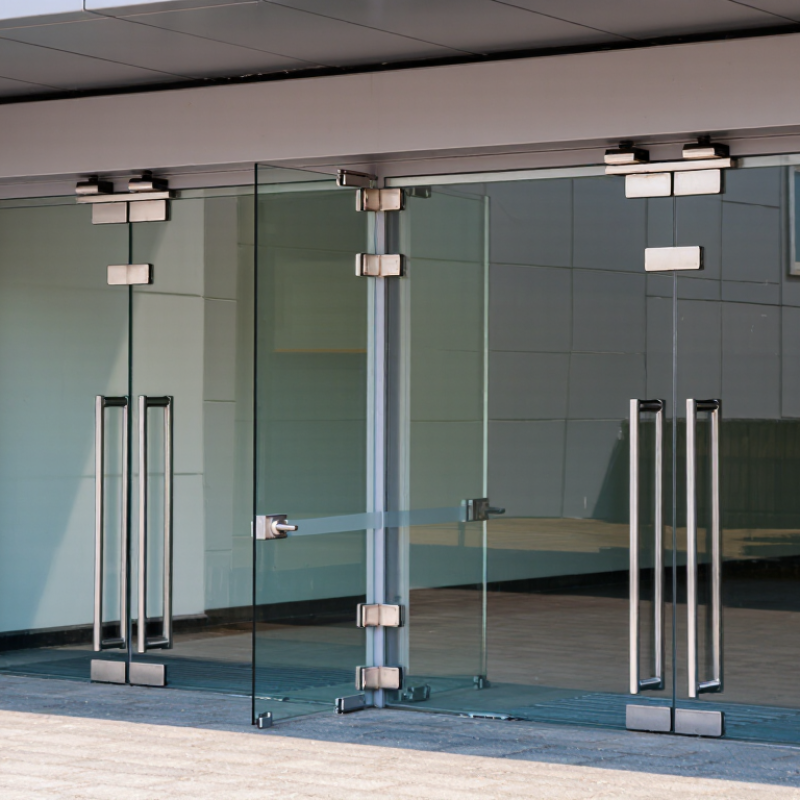
China Top 10 Hardware Required for Commercial Glass Doors?

What Hardware Is Essential for Commercial Glass Doors?

Commercial glass doors need more than attractive panels. Essential hardware includes hinges or floor pivots, patch fittings, pull handles, locks, door closers, and perimeter seals. Each part affects safety, access, and daily durability.

The U.S. Energy Information Administration’s 2018 Commercial Buildings Energy Consumption Survey counted about 6.2 million commercial buildings. It also measured nearly 97 billion square feet of floor space. This scale makes reliable door hardware important. A weak closer can cause slamming, alignment problems, or damaged glass edges. I have seen beautiful entrances fail because installers selected hardware by appearance alone. That mistake is easy to repeat.

Exit hardware deserves careful attention. The National Fire Protection Association reported 1,504,500 fires in the United States during 2023. Commercial doors should support clear evacuation routes and controlled access. Requirements vary by occupancy and location. Check the applicable code before choosing panic devices, locks, or closers.

Tips: Measure door weight, thickness, traffic, and swing direction first. Use adjustable closers for busy entrances. Choose corrosion-resistant fittings near coastal areas. Confirm that every fixing suits the glass type. Do not overtighten clamps. Small errors can become large cracks. Also inspect hinges, seals, and locks during routine maintenance. A six-month review is practical, although high-traffic doors may need monthly checks.

Top 10 Hardware Components for Commercial Glass Door Systems

Top 10 Hardware Components for Commercial Glass Door Systems

Commercial glass doors in China require more than attractive panels and polished edges. Field inspections often show that hardware selection determines alignment, safety, and service life. The ten essential components include glass door hinges, patch fittings, floor springs, pivot sets, locks, pull handles, overhead closers, seals, sliding tracks, and guide rollers. Each part must match the glass thickness, door weight, opening frequency, and installation method.

A floor spring controls closing speed and prevents harsh impacts near busy entrances. Patch fittings transfer loads through carefully prepared glass holes. Locks need accurate engagement, while handles should provide a firm grip without stressing the panel. Seals reduce drafts, dust, and rattling. Small details matter. A loose guide roller can create noticeable noise within weeks.

For automatic systems, sliding tracks and rollers require clean alignment and suitable load ratings. Manual systems may need stronger hinges or hydraulic closers instead. Qualified installers should verify clearances, edge distances, and emergency access requirements before drilling. Local building rules also deserve attention, especially in public facilities. Some specifications look correct on paper but fail during daily use. Rechecking the door after several weeks can reveal settling, uneven floors, or closing resistance that the first inspection missed.

How Each Hardware Component Supports Door Function and Safety

Commercial glass doors need more than attractive panels. Their hardware controls movement, alignment, access, and emergency safety.

A typical system uses ten key components: hinges, pivots, patch fittings, a floor spring, overhead closer, lock, handle, strike plate, door stop, and safety seals. Hinges or pivots carry the glass load and maintain a stable swing path. Patch fittings distribute pressure around drilled or clamped areas. The floor spring controls closing speed, preventing a heavy panel from slamming into a frame or person. It also supports accurate alignment after repeated daily use. Small adjustments matter.

The lock and strike plate secure the opening, while the handle provides a predictable grip during busy traffic. A door stop limits overtravel and protects nearby walls. Safety seals reduce finger gaps, drafts, and impact noise. Where sensors or access controls are installed, they should not delay emergency release. The National Safety Council’s Injury Facts reports that falls remain a major source of workplace injuries, making smooth closing and clear door visibility practical safety priorities. ANSI Z97.1 and CPSC glazing guidance also emphasize safety glazing performance and visible protection against human impact. Yet field conditions often expose weak installation. A slightly loose fitting, uneven floor, or badly adjusted closer can defeat good design. Inspectors should check fasteners, glass edges, closing force, and escape clearance during routine maintenance. Do not trust appearance alone.

How to Select Hardware for Different Commercial Glass Door Types

China Top 10 Hardware Required for Commercial Glass Doors

How to Select Hardware for Different Commercial Glass Door Types

Choosing commercial glass door hardware starts with the door design, not the handle. A frameless pivot door may need floor springs, patch fittings, hinges, handles, and a secure lock. A framed swing door often uses butt hinges, a closer, an electric strike, and weather seals. Sliding doors require top rails, rollers, guides, end stops, and controlled access components.

Measure the glass thickness and panel weight before ordering hardware. Confirm every fitting’s load rating. For busy entrances, choose durable stainless steel or treated metal with smooth, replaceable moving parts. Heavy doors need stronger pivots and closers. Small offices may only need a simple latch and pull handle. Do not install oversized hardware on thin glass.

I have seen attractive handles fail because the fixing distance was wrong. It looked minor. It was not. Check drilling positions, edge clearances, swing direction, and floor conditions on site. Wet entrances may need corrosion-resistant finishes and drainage-aware floor springs. High-traffic doors also benefit from adjustable closing speed and hold-open control. Select safety glazing and compatible access devices according to local building requirements. A qualified installer should verify the final assembly, although even experienced teams can miss alignment after flooring changes. Always test the door repeatedly before handover.

Installation, Compliance, and Maintenance Requirements

Commercial glass doors need more than attractive hardware. The common ten components include hinges, pivots, patch fittings, handles, locks, closers, floor springs, seals, stops, and safety sensors. Each item must match the glass thickness, door weight, traffic level, and opening direction. In practice, drawings often omit the floor condition. That omission can cause uneven closing and damaged fittings.

Installation teams should verify clearances before drilling. The door must not scrape the floor, frame, or adjacent panel. Fit it correctly. For accessible routes, the 2010 ADA Standards limit opening force to five pounds for most interior hinged doors. China projects should also check applicable requirements under GB 55037-2022 and local accessibility codes. Fire-rated assemblies require compatible tested hardware, not ordinary replacement parts. NFPA’s 2023 U.S. fire-loss report recorded approximately 1.5 million fires, showing why reliable escape hardware deserves careful inspection.

Maintenance should include monthly checks for loose fasteners, cracked glass, weak door closers, faulty locks, and sensor delays. High-traffic entrances may need shorter inspection intervals. Clean moving parts without abrasive chemicals, and record adjustment dates. A 2023 facilities maintenance survey by a leading industry research group found preventive maintenance remained a major operational priority across commercial properties. The exact percentage varies by survey method. That limitation matters. A practical checklist should still include closing speed, latch engagement, emergency release, and visible edge damage. One overlooked screw can become a serious failure.

China Top 10 Hardware Required for Commercial Glass Doors? – Installation, Compliance, and Maintenance Requirements
No. Hardware Component Primary Function 1 Floor Spring or Concealed Door Closer Controls closing speed, latching action, and door alignment for frameless or partially framed glass doors. Install on a stable, level substrate. Confirm the closer capacity matches the door weight, width, thickness, and traffic frequency. Align the spindle and patch fitting before final tightening. Use a suitable closer for the door size and application. Where accessibility rules apply, opening force and closing speed must remain within the limits required by the applicable local building code. Inspect closing speed, latching, leakage, cover condition, and fixing screws. Do not adjust beyond the manufacturer’s specified range.
2 Patch Fittings Connect door rails, pivots, locks, and closers to a frameless glass door without requiring a full perimeter frame. Use glass cut-outs and holes specified for the exact fitting. Install approved gaskets or isolation pads between metal and glass, and tighten evenly to avoid point stress. Fittings must be compatible with the glass type, thickness, edge treatment, and door configuration. Safety glazing requirements should be confirmed under the applicable local code, such as GB 15763 series or equivalent standards. Check for loose screws, movement, corrosion, damaged gaskets, and glass edge contact. Replace worn components rather than forcing adjustment.
3 Glass Door Lock or Deadbolt Provides controlled access, privacy, and security for offices, retail areas, entrances, and internal commercial spaces. Set the lock body, strike, and keep accurately so the latch engages without lifting or pushing the door. Maintain required clearances and avoid drilling or modifying tempered glass on site. Emergency egress doors must not be secured in a way that prevents rapid exit. Fire and egress requirements vary by occupancy and jurisdiction; access-control arrangements should be reviewed by the project authority. Lubricate only with a product approved for the lock. Test key operation, latch engagement, cylinder condition, and emergency release function at scheduled intervals.
4 Pull Handle or Lever Handle Provides a safe gripping point for opening and pulling the glass door. Use the correct hole spacing, washers, sleeves, and gaskets. Avoid direct metal-to-glass contact and verify that the handle does not interfere with adjacent panels or walls. Handle shape, projection, and mounting height should support accessible operation where required. Hardware should not create sharp projections or hazardous snag points. Check handle tightness and signs of movement. Clean with a non-abrasive solution and inspect mounting holes for cracking or edge damage.
5 Hinges or Pivot Sets Support the door leaf and allow controlled rotation around the vertical axis. Install hinges or pivots on properly prepared glass cut-outs. Keep the door plumb, maintain manufacturer-specified clearances, and distribute loads evenly through gaskets and setting components. The hinge or pivot capacity must exceed the calculated door load, including hardware and impact effects. Door swing and clear width must comply with the applicable accessibility and egress provisions. Inspect alignment, bearing or pivot wear, fixing torque, and abnormal noise. Correct sagging promptly to prevent stress at glass edges and locks.
6 Top and Bottom Rails Provide structural support, protection, and fixing points for larger framed or semi-frameless glass doors. Use compatible end caps, rails, gaskets, and setting blocks. Confirm the glass is fully seated and that rail fasteners are tightened without crushing or twisting the glass. Rail and glass selection should be based on door size, wind exposure, impact risk, and the applicable safety-glazing requirements. Fire-rated assemblies require tested, compatible components. Check rail connections, end caps, gaskets, sealants, corrosion, and glass seating. Replace damaged gaskets or deformed rails before continued heavy use.
7 Threshold, Door Sweep, and Weather Seal Limits air, water, dust, light, and noise infiltration while protecting the lower door edge. Install on a level, continuous surface and maintain a smooth transition. Set the sweep to contact the threshold lightly without increasing opening force or obstructing drainage. Threshold height and door clearance must be compatible with accessibility requirements. Entrance assemblies exposed to weather should be designed with suitable drainage and water-management details. Remove dirt from the threshold and sweep. Inspect for compression, tearing, gaps, water leakage, and trip hazards; replace seals when they no longer recover their shape.
8 Door Stop or Limiting Device Restricts excessive opening and protects walls, adjacent glazing, hinges, and hardware from impact. Position the stop so impact is transferred to the frame or floor, not to the glass edge or handle. Coordinate the stopping angle with circulation paths and nearby equipment. The device must not reduce required clear width, obstruct accessible routes, or interfere with emergency operation. Avoid floor-mounted trip hazards in public circulation areas. Confirm the stop remains secure and has not shifted. Replace worn rubber buffers and inspect nearby glass and fittings for impact marks.
9 Glass Clamps, U-Channels, and Setting Blocks Hold fixed glass panels in place and transfer loads while isolating glass from rigid metal contact. Use correctly sized channels, compatible seals, and non-metallic setting blocks. Keep glass edges free from concentrated loads, chips, and direct contact with fasteners. Fixed glazing should use safety glass where required by location and impact risk. For laminated or insulated glass, confirm that the channel and seal system is compatible with the glass build-up. Inspect clamps, channels, seals, and setting blocks for movement, shrinkage, corrosion, and glass displacement. Re-seat or replace components only after relieving the glass load safely.
10 Automatic Door Operator and Sensor Package Automates opening and closing for high-traffic entrances and improves hands-free access. Coordinate operator capacity, header or transom support, power supply, sensors, safety zones, and manual override before installation. Commission opening speed, hold-open time, and obstacle detection. Automatic doors must meet applicable accessibility, electrical safety, fire, and egress requirements. Sensors and emergency release arrangements should be tested as part of the approved door system. Clean sensor lenses, test safety detection and manual operation, inspect cables and covers, and record periodic servicing. Remove the door from service if unsafe movement or failed detection is observed.
Project note: Final hardware selection must be verified against the door size, glass specification, usage cycle, structural support, fire strategy, accessibility rules, and local Chinese standards or project specifications. Tempered glass should not be cut or drilled after heat treatment; all required processing should be completed before tempering.

FAQS

What hardware components are essential for a commercial glass door?

Common components include hinges, pivots, patch fittings, floor springs, locks, handles, seals, stops, tracks, and guide rollers. Each part affects movement, alignment, access, or safety. Small parts matter.

How should hardware match the glass door?

Check the glass thickness, panel weight, opening frequency, and door type. Heavy panels need stronger pivots, hinges, and closers. Do not fit oversized hardware to thin glass. Confirm every load rating before ordering.

What does a floor spring do?

A floor spring controls closing speed and reduces harsh impacts. It helps keep the panel aligned after repeated use. Uneven floors can create resistance. Recheck the setting after installation.

Which hardware suits sliding glass doors?

Sliding doors need rails, rollers, guides, end stops, and suitable access components. Tracks require clean alignment and correct load ratings. A loose guide roller may produce noise within weeks. That detail is easy to miss.

Which hardware suits swing or pivot doors?

Pivot doors commonly use floor springs, pivots, patch fittings, handles, and locks. Framed swing doors may use hinges, closers, latches, and seals. The opening direction and floor condition influence the choice.

How do locks, handles, and strike plates support safety?

Locks and strike plates must engage accurately without forcing the door. Handles should provide a firm grip without stressing the glass. Test the handle with one hand. Access controls should not delay emergency release.

Why are seals and door stops important?

Seals reduce drafts, dust, rattling, and some finger gaps. Door stops limit overtravel and protect nearby walls. They also reduce impact noise during busy periods. A damaged seal can look harmless.

What should installers check before drilling glass?

Installers should verify glass edges, hole positions, clearances, swing direction, and floor conditions. They should confirm safety glazing and local building requirements. Emergency access must remain clear. Measure twice.

How can a completed glass door system be tested?

Open and close the door repeatedly before handover. Check closing force, lock engagement, clearances, fasteners, and glass edges. Inspect again after several weeks. Settling and flooring changes may alter alignment.

What maintenance problems commonly appear after installation?

Loose fittings, uneven floors, worn rollers, and incorrect closer settings are common issues. Busy entrances need regular inspection. Appearance alone proves little. I would recheck the whole assembly, even when it looks perfect.

Conclusion

Choosing the right hardware is essential for creating safe, durable, and easy-to-operate commercial glass doors. This guide explains what hardware is required for commercial glass doors, including hinges, handles, locks, closers, pivots, seals, floor springs, patch fittings, tracks, and safety-related accessories. Each component plays a specific role in supporting door alignment, movement, security, weather resistance, and user protection. Understanding how these parts work together helps building owners and installers develop reliable door systems for offices, retail spaces, hotels, and other commercial environments.

The article also explores how to select hardware according to different glass door types, such as hinged, sliding, frameless, and automatic systems. It highlights the importance of matching hardware with glass thickness, door weight, traffic frequency, and usage conditions. In addition, the guide covers professional installation, inspection, compliance considerations, and routine maintenance, helping reduce wear, prevent operational problems, and extend the service life of commercial glass doors.

Madeline

Madeline

Madeline is a dedicated marketing professional with a wealth of expertise in our company's core offerings. With a keen understanding of the industry, she brings a unique perspective to her role, consistently delivering high-quality content that highlights the superior aspects of our products. As......