China Top 10 Glass Door Install Errors How to Avoid Them?

Time:2026-10-22 Author:Isabella
0%

Installing a glass door looks precise, yet small errors can create large failures. This guide examines China’s top 10 glass door installation errors and explains how to avoid common glass door installation mistakes. The focus is practical: accurate measurements, suitable hardware, safe handling, and careful final inspection.

Mark Meshulam, a forensic architect and glass-performance specialist, offers a useful warning: “Most glass failures begin with stress created during installation, not with the glass itself.” That principle deserves attention. A hinge installed slightly out of alignment can force the door against the frame. Missing setting blocks can transfer pressure to an unsupported edge. Overtightened clamps may leave invisible damage that appears weeks later.

Experienced installers check the opening before unpacking the door. They confirm the wall is plumb, the floor is level, and the anchors match the substrate. They use clean gloves, correct shims, and manufacturer-approved torque values. They also protect glass edges from concrete, metal fragments, and sudden impacts. Small details matter.

Still, no checklist catches everything. Site conditions change. Drawings can be incomplete. Teams may rush the final adjustment. That is where many avoidable problems begin. A careful inspection should test swing clearance, hinge movement, latch engagement, seals, and drainage. It should also record measurements and photographs before handover. This article is not a substitute for qualified local review, but it provides a clearer starting point for safer, more dependable glass door work.
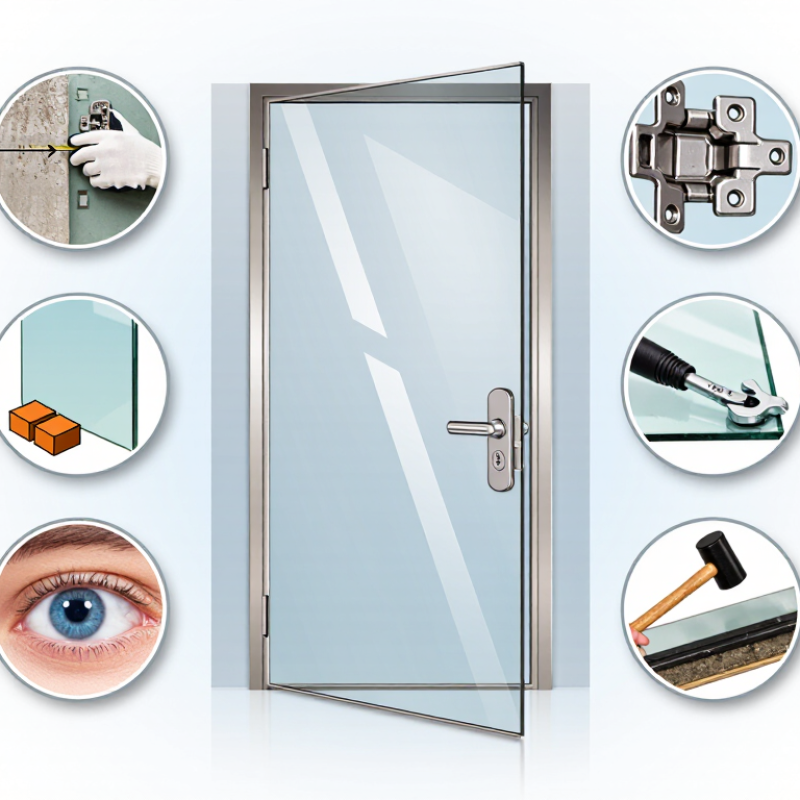
China Top 10 Glass Door Install Errors How to Avoid Them?

Glass Door Installation Standards and Common Errors in China

China’s glass door installation standards demand more than a clean appearance. Project teams should check applicable editions of GB 15763.2, JGJ 113, and GB 50210. Local specifications may add requirements. Always verify them before installation.

A frequent error is selecting ordinary glass for a high-impact location. Safety glass should be specified according to the door’s size, use, and surrounding conditions. Tempered glass can reduce injury risk, while laminated glass may retain fragments after breakage. Confirm the safety marking and keep delivery records.

Frame openings must be measured after the wall finish is complete. Small deviations can twist the door and overload hinges. Leave the designed clearance around the panel. Do not force a tight fit. That mistake often causes rubbing, noise, or spontaneous edge damage.

Anchors should connect with the actual substrate, not only the surface finish. Installers must check hinge alignment with a level and measure the closing gap at several points. Floor springs need firm seating and correct adjustment. Poor drainage near the threshold can create corrosion and slippery conditions.

Do not drill or cut tempered glass on site. Its edges require protection during transport and handling. Inspect chips, scratches, uneven gaps, loose fasteners, and unstable handles before handover. Record these checks with photographs.

Even experienced crews miss small details. A rushed inspection can overlook a door that closes too quickly. Recheck after several opening cycles. Some site assumptions are wrong. Performance matters more than appearance.

Measuring Openings and Selecting the Correct Glass Door System

A precise glass door installation begins with the opening, not the door. Measure width at the top, middle, and bottom because walls often taper slightly. Check height from the finished floor to the header in several locations. Record the smallest measurement. A few millimeters can change the required system.

Use a level to inspect both jambs and the floor. A sloping floor may require adjustment hardware or a different enclosure design. I once trusted a single center measurement, and the finished panel needed an awkward correction. That mistake taught me to photograph every measurement and confirm the finished surfaces before ordering. Measure tile, trim, seals, and clearances, not just the rough opening.

Tips: Keep a written measurement sheet. Mark each dimension clearly. Check the opening again after flooring is installed. Select a system that matches the measured conditions, glass thickness, panel weight, and available adjustment range. Hinged, sliding, and fixed-panel systems do not solve the same structural problems. Confirm that the wall can support the hardware and that the door swing remains clear of nearby fixtures. Safety glass is essential, but the correct specification also depends on location, exposure, and local installation requirements. Do not force a standard size into a nonstandard opening. It may fit. It may also fail later.

Avoiding Structural, Alignment, and Hardware Installation Mistakes

China Top 10 Glass Door Install Errors: How to Avoid Them?

Structural mistakes often begin before the door arrives. Check the opening, substrate, header, and floor load first. The National Glass Association’s 2023 Glass and Glazing Manual emphasizes verified dimensions, suitable anchors, and controlled glass handling. A heavy door cannot correct a weak wall.

On site, installers commonly force frames into uneven openings. That creates stress, poor seals, and uneven gaps. Use a calibrated level, laser, and feeler gauge. Confirm the jambs are plumb before tightening every anchor. Leave the specified movement space; “tight” is not always stable.

I have seen teams measure the glass, but ignore the finished floor thickness. That small oversight changes the swing path.

Hardware errors appear later. Hinges must align with the load path, while pivots require accurate centerlines. Set closers after the door hangs freely. Do not use adjustment screws to hide structural misalignment.

The U.S. Bureau of Labor Statistics reported 1,075 construction fatalities in 2023, including 421 fatal falls. Safe handling, temporary supports, and two-person lifting are practical controls, not paperwork.

NGA guidance also supports checking edge clearance and avoiding concentrated glass stress.

One imperfect habit remains common: installers rush the final inspection. Test the latch, swing, seals, fasteners, and floor clearance repeatedly. Record the measurements. Then challenge them.

Preventing Seal, Safety, and Weatherproofing Failures

China Top 10 Glass Door Install Errors: How to Avoid Them?
Preventing Seal, Safety, and Weatherproofing Failures

Glass door failures often begin before the frame is fixed. On site, I have seen installers measure finished openings instead of checking the actual wall. That small mistake leaves uneven gaps. Water then enters around the lower corners. Measure width, height, diagonals, and sill level twice. Keep a clear drainage path beneath the threshold.

Use compatible gaskets, setting blocks, and sealants for the door system. Do not stretch rubber seals around corners. They shrink later. Sealant should fill clean, dry joints, not cover dust or standing water. A continuous seal matters, but blocked weep holes can trap rain inside the frame. Test the door with controlled water after curing.

Safety errors are less visible but more serious. Confirm that the glass type, thickness, edge treatment, and hardware match the approved design. Tempered or laminated safety glass may be required near entrances, depending on local codes. Check clearances around hinges and locks. The door should close without scraping, twisting, or sudden impact. Adjust it.

Small oversights remain common. A final inspection under real wind and rain conditions is valuable. Still, weather tests cannot repair a poorly aligned frame. Record measurements, sealant batches, curing times, and adjustment results. If a seal looks uneven, do not assume it will improve. Remove it and inspect the joint again.

This brand-neutral risk-priority index ranks common glass door installation errors by their potential impact on sealing, occupant safety, water resistance, and long-term operation. Higher scores indicate issues that should receive earlier inspection and corrective action.

Inspection, Testing, and Maintenance After Glass Door Installation

China Top 10 Glass Door Install Errors: How to Avoid Them

Inspection should continue after the glass door is installed. During handover, check the glass edges, hinges, locks, seals, and floor clearance under normal lighting. Small chips near a corner can grow after repeated use. I have found that fingerprints often hide fine scratches, so cleaning must happen before final inspection. Confirm that safety markings are visible from both sides. They should not sit behind handles or decorative films.

Testing should copy real daily use. Open and close the door repeatedly, then observe noise, vibration, rebound, and closing speed. Test the lock with the door slightly misaligned, because users rarely close it perfectly. Check emergency release functions where applicable, following local safety requirements. A door that works once is not fully tested. Our early inspections sometimes focused too much on appearance. That was a mistake.

Create a maintenance record with inspection dates, observed defects, and corrective actions. Tighten approved hardware carefully, but never force a loose fitting into position. Clean tracks and seals with suitable materials, since harsh chemicals may damage surfaces. Recheck alignment after the building settles or nearby construction ends. Ask staff to report scraping sounds, difficult closing, or sudden movement. These details often appear before visible failure. Do not ignore them. Where instructions are unclear, consult a qualified glass-door technician and verify the work against applicable local codes.

FAQS

What should be checked before a glass door arrives?

Measure the opening, substrate, header, floor load, and finished floor thickness. A heavy door cannot fix a weak wall.

Why should installers avoid forcing a frame into an uneven opening?

Forced frames create stress, poor seals, and uneven gaps. Use a level, laser, and feeler gauge before tightening anchors.

How much movement space should be left around the frame?

Follow the specified clearance. “Tight” is not always stable, especially when the building shifts slightly.

How can installers prevent swing-path problems?

Measure the finished floor, not just the opening. A small floor-height mistake can change the door’s swing path.

What are common hinge and pivot mistakes?

Hinges must follow the load path. Pivots need accurate centerlines. Do not hide structural errors with adjustment screws.

What safe handling practices are useful during installation?

Use temporary supports and two-person lifting for heavy glass. Keep hands clear of edges. Rushing is a bad habit.

What should be tested during final inspection?

Check glass edges, hinges, locks, seals, fasteners, latch action, swing, and floor clearance under normal lighting.

How should the door be tested for daily use?

Open and close it repeatedly. Watch for noise, vibration, rebound, and uneven closing speed. One successful cycle proves little.

What maintenance records should be kept after installation?

Record inspection dates, defects, measurements, and corrective actions. Recheck alignment after building settlement or nearby construction.

When should a technician inspect the door?

Seek qualified help for scraping sounds, difficult closing, sudden movement, or unclear instructions. We sometimes ignore early warnings. That needs to change.

Conclusion

Installing a glass door correctly in China requires careful planning, accurate measurements, and compliance with applicable installation and safety standards. The process begins with checking the opening, confirming wall conditions, and selecting a suitable glass door system for the building’s use, size, load, and environment. Common problems include incorrect dimensions, insufficient structural support, poor alignment, and improperly fitted hinges, tracks, locks, or handles. A clear installation plan and careful leveling can help technicians understand how to avoid common glass door installation mistakes before they affect performance or safety.

Special attention should also be given to seals, drainage, weatherproofing, edge protection, and safe glass handling. Gaps, uneven joints, or weak sealing may cause drafts, water entry, noise, or premature damage. After installation, the door should be inspected and tested for smooth movement, stable closing, secure locking, proper clearance, and reliable sealing. Regular maintenance, including hardware checks, cleaning, and seal inspection, helps preserve safety, appearance, and service life.

Isabella

Isabella

Isabella is a dedicated marketing professional with a sharp focus on driving brand growth and engagement through strategic content creation. With an extensive background in digital marketing, she combines her passion for storytelling with her keen understanding of industry trends to deliver......