Rust can quietly damage glass door hardware before it becomes obvious. A small orange mark near a hinge often signals trapped moisture. Salt air, bathroom steam, and poor ventilation make the problem worse. Learning how to prevent glass door hardware from rusting starts with understanding these daily conditions. The right approach protects both appearance and function.
This guide explains seven practical ways to reduce corrosion on hinges, clamps, handles, and brackets. The recommendations reflect common maintenance practices used by installers, property managers, and experienced homeowners. Regular cleaning removes salt, soap residue, and fine dirt that hold moisture against metal surfaces. Drying matters just as much. A soft microfiber cloth can reach edges where water usually hides.
Material choice also deserves attention. Stainless steel usually performs better than ordinary steel, but it is not completely rust-proof. Even high-quality hardware can stain when exposed to harsh chemicals or coastal air. Gentle cleaners, careful inspections, and suitable protective products can extend its service life. Follow the manufacturer’s instructions whenever available. That detail is often missed.
No method works forever. Conditions change, and some fittings may already have hidden corrosion. Look closely around screw heads, washers, and glass contact points. Replace badly damaged parts rather than covering them with polish. Small habits help. A monthly check can prevent loose hardware, rough movement, and expensive glass-door repairs. The following seven methods offer a practical starting point, though your environment may require adjustments.
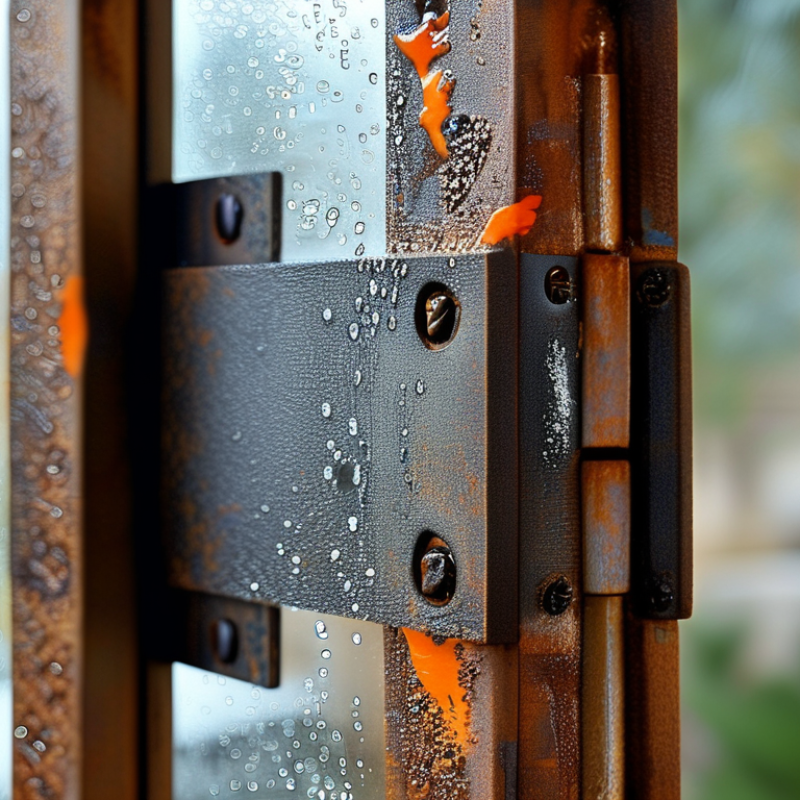
Rust often begins with a small orange mark near a screw or hinge. Moisture, salt, and cleaning chemicals can slowly damage glass door hardware. Choosing rust-resistant materials is the strongest preventive step.
Marine-grade 316 stainless steel performs well in humid bathrooms and coastal homes. Its added molybdenum improves resistance to salt-related corrosion. Grade 304 stainless steel is also reliable for ordinary indoor areas. Solid brass can work, but it needs a durable protective finish. Avoid thin plated hardware, especially where water collects.
Material compatibility matters too. Mixing different metals may create galvanic corrosion. Use matching screws, washers, and fittings whenever possible. During installation, keep cut edges smooth and dry. A tiny scratch in a coating can become a larger problem later. I have seen attractive hardware fail because installers ignored trapped moisture. The material was good, but the installation was careless.
Tips: Wipe hardware after showers. Use a soft cloth. Avoid chlorine-based cleaners. Inspect joints monthly. If rust appears, repair it early. No material stays perfect forever, and even stainless steel needs attention.
Material selection is one of the most effective ways to reduce rust and pitting on glass door hardware. The chart compares representative Pitting Resistance Equivalent Number (PREN) values. Higher PREN generally indicates better resistance to chloride-induced pitting.
Practical prevention measures:
PREN is commonly estimated as Cr + 3.3 × Mo + 16 × N, using representative nominal alloy compositions. It is a comparative indicator, not a guaranteed service-life prediction.
Clean hardware regularly to remove moisture, soap film, and airborne contaminants. Rust often begins in small crevices around hinges, handles, and screws. In my maintenance experience, a soft microfiber cloth removes residue without scratching polished surfaces. Use warm water and a mild, pH-neutral cleaner. Then dry every joint completely. Do not let water sit overnight.
NACE International’s IMPACT study estimated global corrosion costs at about 2.5 trillion dollars annually, equal to roughly 3.4% of global GDP. That figure covers many industries, but it shows why small maintenance tasks matter. Salt, chlorine, and hard-water deposits can remain invisible after normal wiping. Stainless steel hardware is not rust-proof. It still needs regular care, especially in bathrooms, coastal buildings, and humid commercial spaces. I once treated cleaning as enough, but missed the lower hinge. That mistake allowed residue to collect there.
Tips: Wipe hardware after showers or heavy use. Clean weekly in humid areas and monthly in dry interiors. Use a soft brush for screw heads and hinge gaps. Rinse away cleaner residue, then dry with a separate cloth. Avoid steel wool, abrasive powders, and chlorine-based products unless the manufacturer approves them. Check for orange spots, rough edges, or loose fasteners. Early signs deserve attention, although not every mark is active corrosion.
Protective coatings are one of the most practical ways to slow rust on glass door hardware. I have found that preparation matters more than the coating itself. Remove salt, dust, soap residue, and loose corrosion with a soft brush. Dry every joint carefully, especially beneath washers and around screw heads. Moisture trapped in these areas can defeat a good treatment.
Choose a corrosion-resistant coating designed for the hardware’s material. Metal surfaces must be clean and completely dry before application. Mask the glass, seals, hinges, and lock cylinders to prevent unwanted buildup.
Apply several thin layers instead of one heavy coat. Let each layer cure according to the product instructions. Thick coatings may crack when hinges move. That mistake is easy to make.
Water-repellent treatments can reduce droplets on nearby glass and exposed metal. Use a formulation suitable for the specific surface. Do not spray directly into keyways, bearings, or friction points. Wipe away overspray immediately with a lint-free cloth. In coastal or humid areas, inspect the hardware monthly. Check for dull spots, orange marks, and peeling edges. Reapply before corrosion spreads beneath the finish.
I once assumed a sealed door needed little maintenance. That was wrong. A tiny scratch near a hinge allowed rust to return. Small inspections often prevent expensive replacement work.
Rust on glass door hardware often begins with trapped moisture, not poor metal quality. Warm indoor air meets a cold hinge, handle, or fastener. Water then forms in tiny beads and remains in hidden joints. The U.S. Environmental Protection Agency recommends maintaining indoor relative humidity between 30% and 50% to limit moisture problems. A small digital hygrometer near the door makes this target measurable.
Air movement matters. Keep bathroom exhaust fans running during showers and for 20 minutes afterward. Open nearby windows when outdoor conditions are dry. Do not block transfer grilles or place wet towels against the door. In commercial spaces, check whether ventilation actually reaches the entrance. ASHRAE guidance commonly uses 30% to 60% relative humidity for occupied indoor conditions, but lower humidity can help protect exposed hardware. Wipe condensation from handles and lower fittings with a dry microfiber cloth. Small actions count.
Corrosion spreads quietly.
The NACE IMPACT study estimated global corrosion costs at about 3.4% of worldwide gross domestic product. That figure covers many industries, but it shows why moisture control deserves attention. In my maintenance experience, improving airflow often works better than repeatedly polishing rust stains. Still, I have sometimes blamed the hardware too quickly. A poorly sealed shower area, weak extraction, or cold air leak may be the real cause. Inspect corners, seals, and wall vents monthly. If humidity stays high, improve ventilation before applying protective products.
| No. | Prevention Method | Recommended Practice | Useful Target or Frequency | Why It Helps Prevent Rust |
|---|---|---|---|---|
| 1 | Improve Airflow Around the Door | Keep air vents, exhaust fans, and door-side air paths unobstructed. Use mechanical ventilation when natural airflow is insufficient. | Operate exhaust ventilation during moisture-producing activities and continue it afterward until visible condensation has cleared. | Moving humid air away from hinges, handles, clamps, and screws reduces the time that moisture remains on metal surfaces. |
| 2 | Control Relative Humidity | Monitor humidity with a hygrometer and use dehumidification or increased ventilation when the area remains damp. | Aim for approximately 30%–50% relative humidity; take corrective action when humidity stays above 60% for extended periods. | Lower humidity reduces condensation and limits the electrolyte film required for electrochemical corrosion. |
| 3 | Remove Water and Condensation | Wipe water from hardware, glass edges, thresholds, and surrounding surfaces with a clean, non-abrasive cloth. | Dry the hardware whenever water is observed and always after heavy splashing, cleaning, or shower use. | Standing water and repeated wetting create conditions that accelerate surface oxidation, especially in crevices and joints. |
| 4 | Clean Away Salt and Residue | Clean metal surfaces with clean water and a mild, pH-neutral cleaner. Rinse away cleaner residue and dry completely. | Clean at least weekly in frequently wet areas; increase the frequency where salt spray, hard-water deposits, or cleaning chemicals are present. | Chlorides, mineral deposits, and chemical residues can damage passive protective films and promote localized corrosion. |
| 5 | Use Corrosion-Resistant Hardware | Select hardware with corrosion resistance appropriate for the environment. Use highly corrosion-resistant stainless steel or suitably protected finishes in coastal or high-chloride locations. | Match the material and finish to indoor, wet-room, coastal, or industrial exposure before installation. | Material selection reduces the likelihood that moisture, salt, and airborne contaminants will cause premature corrosion. |
| 6 | Prevent Contact Corrosion | Avoid mixing incompatible metals in wet connections. Use compatible fasteners, isolating washers, and correctly fitted components where needed. | Check joints during installation and whenever hardware is replaced or adjusted. | Direct contact between dissimilar metals in the presence of moisture can create galvanic corrosion and accelerate deterioration. |
| 7 | Inspect and Maintain Regularly | Inspect screws, hinges, clamps, handles, seals, and drainage areas for discoloration, pitting, loose joints, or damaged finishes. | Inspect monthly in wet or coastal environments and at least quarterly in relatively dry indoor areas. | Early removal of deposits and prompt replacement of damaged parts prevents small corrosion spots from spreading. |
Glass door hardware often rusts at edges, screws, hinges, and bottom brackets.
In humid bathrooms, inspect these areas every two to four weeks. Look for orange spots, rough movement, loose fasteners, or dark lines beneath fittings. A phone flashlight reveals hidden moisture. Wipe the hardware after showers, then dry corners with a soft cloth. Small habit, noticeable difference. Salt and cleaning residue can hold water against metal, so rinse surfaces with clean water when needed. Never use abrasive pads on finished hardware. They can create scratches that trap moisture.
During maintenance, test the door gently. It should swing or slide without grinding, dragging, or sudden resistance. Tighten loose screws carefully, but do not force them. Use only a lubricant compatible with the hardware finish and follow its instructions. Keep lubricant away from glass seals and walking surfaces.
Check drainage and ventilation too. A constantly wet threshold can defeat careful cleaning. I once focused on visible hinges and missed corrosion under a lower bracket. That oversight was a useful reminder: inspect from several angles.
Replace corroded components promptly when plating flakes, threads weaken, or movement remains rough after cleaning. Do not merely paint over active rust. The damaged part may fail and stress the glass. Have a qualified glazier assess fittings when removal could affect panel support.
Match replacement parts for load, size, and glass compatibility. Keep a simple inspection log with dates and photos. It exposes patterns, although my early notes were too vague to help much. Clear records make maintenance decisions more reliable.
: Marine-grade 316 stainless steel suits humid bathrooms and coastal homes. Its added molybdenum improves salt resistance. Grade 304 stainless steel works well indoors. Solid brass needs a durable protective finish.
Thin plating can wear quickly where water collects. Exposed metal may then corrode underneath. Choose solid or corrosion-resistant materials instead. Small failures grow.
Mixing metals may cause galvanic corrosion. Use matching screws, washers, and fittings whenever possible. Compatibility matters around damp hinges and fasteners.
Wipe it with warm water and a mild, pH-neutral cleaner. Use a soft microfiber cloth. Clean screw heads and hinge gaps with a soft brush. Rinse away residue, then dry every joint.
Clean weekly in humid rooms and monthly in dry interiors. Wipe the hardware after showers or heavy use. Do not leave water overnight.
Avoid steel wool, abrasive powders, and chlorine-based cleaners. They may scratch surfaces or damage protective finishes. Use gentler products unless the hardware instructions approve stronger cleaners.
No coating lasts forever. Clean and dry the surface before applying treatment. Use several thin layers, not one heavy coat. Thick coatings can crack when hinges move.
Use treatments made for the specific surface. Mask the glass, seals, hinges, and lock cylinders. Do not spray into keyways, bearings, or friction points. Wipe away overspray immediately.
Look for orange spots, rough edges, dull areas, peeling finishes, and loose fasteners. Check monthly in coastal or humid areas. Not every mark means active corrosion, but early inspection helps.
Yes. Keep cut edges smooth and dry. Remove trapped moisture beneath washers and around screw heads. A good material can still fail after careless installation. My earlier assumption was wrong.
Preventing rust is essential for maintaining the appearance, safety, and smooth operation of glass door hardware. If you are wondering how to prevent glass door hardware from rusting, begin by selecting corrosion-resistant materials that can withstand moisture and frequent use. Regular cleaning is also important because water residue, dust, salt, and other contaminants can accelerate corrosion. Use a soft cloth and a mild cleaning solution, then dry every surface thoroughly, especially around joints, screws, and fittings.
Additional protection can be achieved by applying a suitable protective coating or water-repellent treatment designed for the hardware’s material. Good ventilation and controlled humidity around the door will help reduce condensation and moisture buildup. Finally, inspect the hardware regularly for discoloration, loose parts, pitting, or early signs of corrosion. Tighten or clean components when necessary, and replace severely damaged pieces promptly to prevent rust from spreading and to keep the door reliable over time.

Nova Glass Door